Open-plan living has changed the way we use our homes. Kitchens, dining areas and living rooms are often brought together into one large, sociable space – perfect for cooking while chatting, entertaining friends or keeping an eye on the children.
Whilst open-plan living creates a wonderful social space, there’s another side to consider when removing those walls. When a kitchen opens directly into a living area, there is little to slow the movement of smoke and fire. A small cooking fire can develop rapidly, and smoke can travel across an open space in seconds.
That doesn’t mean you need to give up your open-plan lifestyle. It simply means fire safety needs to be considered as part of the design. From choosing the right alarms, to using extraction effectively, a few simple measures can make a significant difference to wellbeing and safety of you and your loved ones.
Why Safety Matters for Open-Plan Layouts
In a more traditional home, doors and walls can help slow the spread of smoke and fire from one room to another. Open-plan layouts remove some of those barriers. For example, if a fire starts in the kitchen, there is nothing physical separating it from the sofa, carpets, dining table, essentially a whole host of highly combustible materials that are in the adjoining living space. Smoke can also travel quickly through the entire area and potentially towards bedrooms and escape routes. This is why early detection is particularly important in open-plan homes. The right alarm, in the right location, can provide an early warning before a small incident becomes a much bigger one.
It is also important to think about the different risks within an open-plan space. The kitchen needs protection from cooking-related fires, while the living area may be more at risk from things such as upholstered furniture, electrical equipment, candles and heaters. Rather than treating an open-plan room as one uniform space, think about what happens in each area and choose your fire protection accordingly.
The Biggest Fire Risks in Open-plan Living
Cooking is one of the most significant sources of accidental fires in the home. And when the kitchen forms part of an open-plan living area, a fire can spread beyond the kitchen very quickly. A pan of oil left unattended, a grill that has been forgotten or grease building up in an oven can all create a serious fire risk.
Think Carefully About Your Alarms
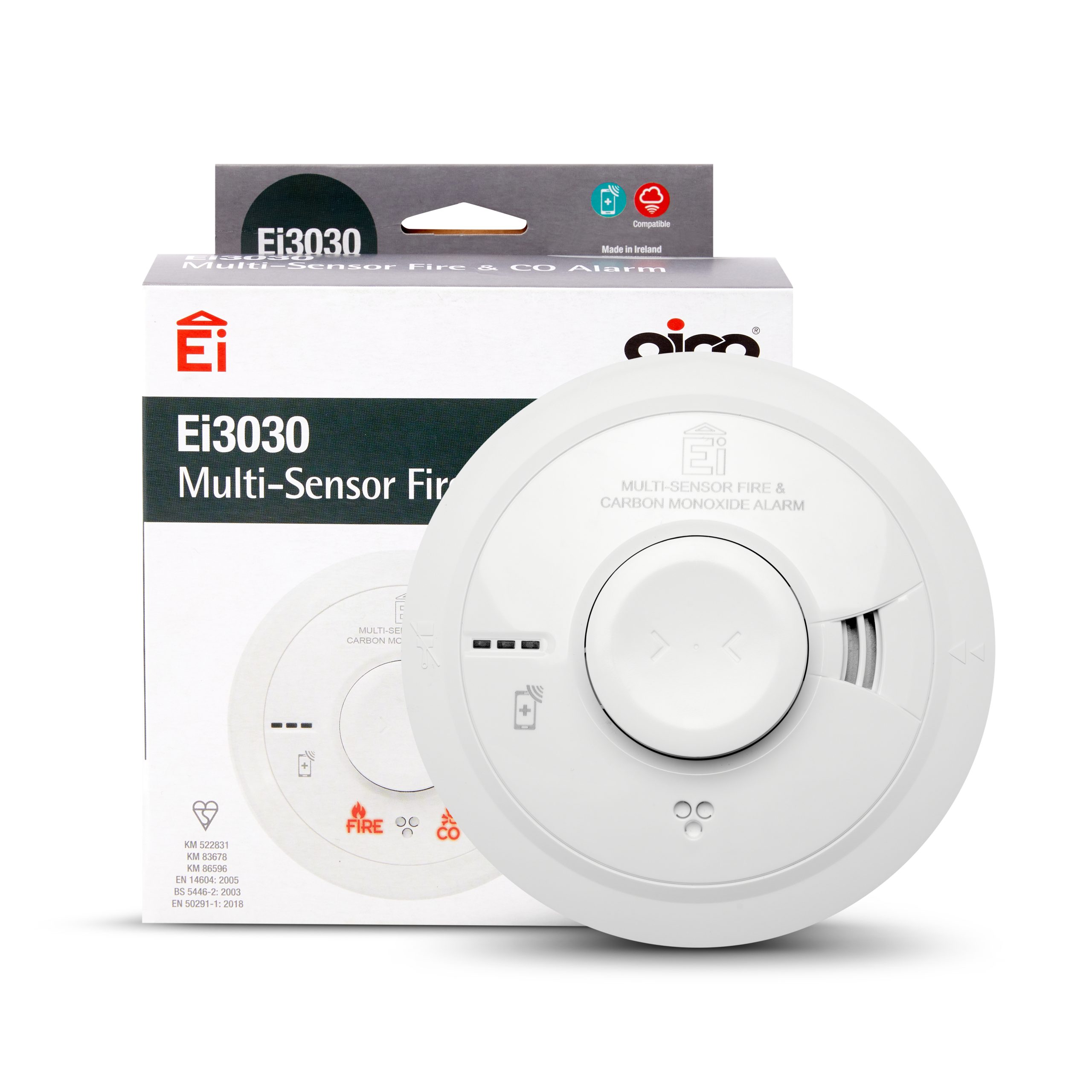
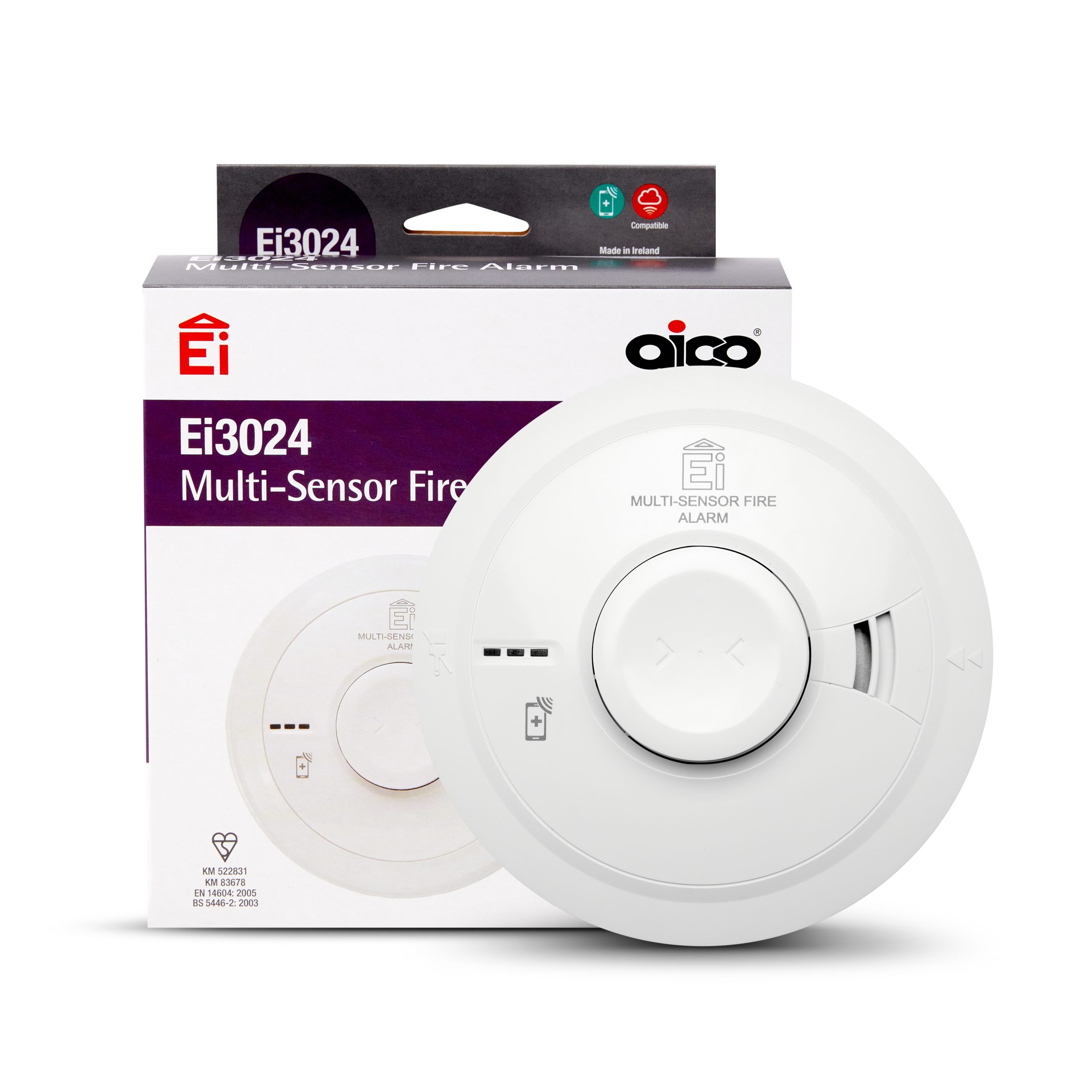
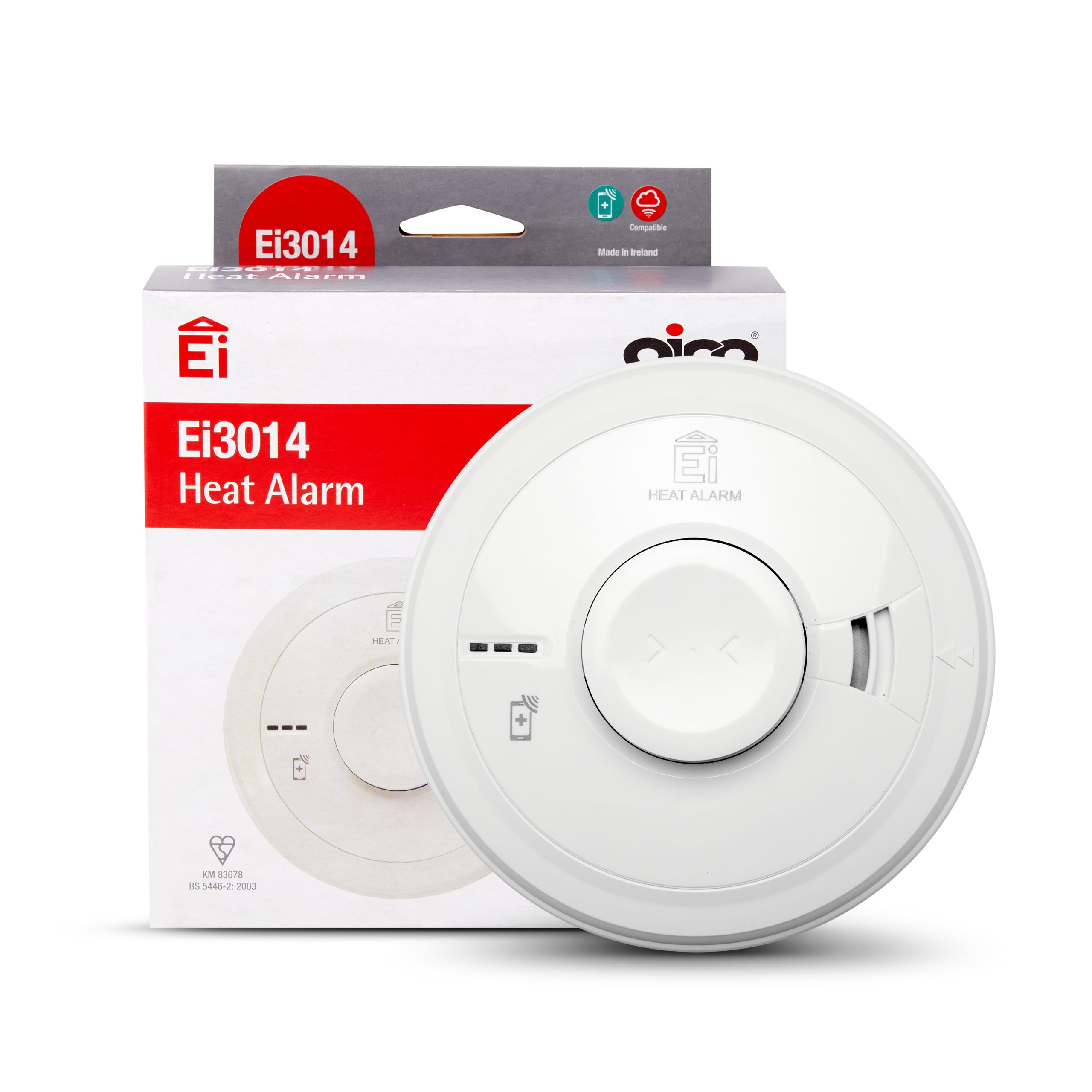
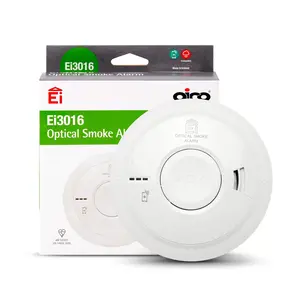
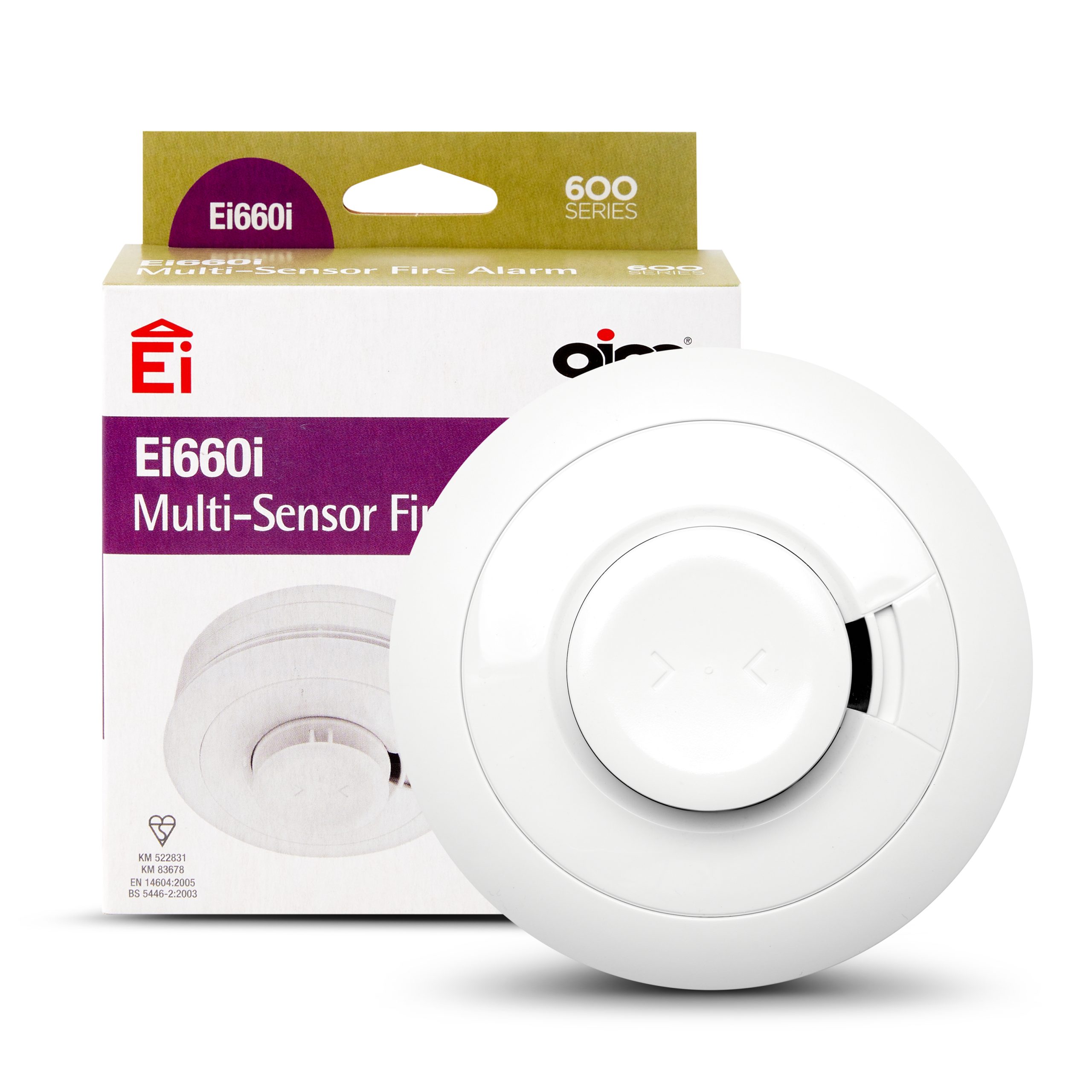
One of the most important considerations is where different types of alarms are positioned. Normal cooking fumes can cause nuisance alarms, in instances where smoke alarms have been positioned too close to a cooking area. For this reason, you should choose multi-sensor heat and carbon monoxide alarms in kitchens, as they are less sensitive to cooking fumes and combine heat and carbon monoxide detection in one alarm. Positioning a heat alarm in a room other than a kitchen, would not provide the required level of coverage, as a heat alarm is designed to activate when the temperature reaches 58°C or above, meaning it may not respond quickly enough to a fire. For open-plan kitchen and living spaces, a multi-sensor fire alarm can be used. This provides the widest fire response by detecting both smoke and heat within a single alarm, offering suitable protection across the combined spaces.
Get The Positioning Right
It isn’t simply a case of putting an alarm wherever there is space, and it depends on the type of alarm too. Heat alarms must be ceiling mounted; they cannot be wall mounted. Smoke alarms should be ceiling mounted but can be wall mounted where ceiling mounting is impractical/not possible. The alarms should be positioned as centrally as possible within the area they are protecting, and at least 300mm away from walls, light fittings and other obstructions. This helps keep them out of areas where air movement may be restricted. In an open-plan home, consider the whole route that smoke could take. Alarms should provide appropriate coverage of the kitchen, living areas and escape routes, rather than relying on a single alarm to protect a large space.
Consider Interconnected Alarms
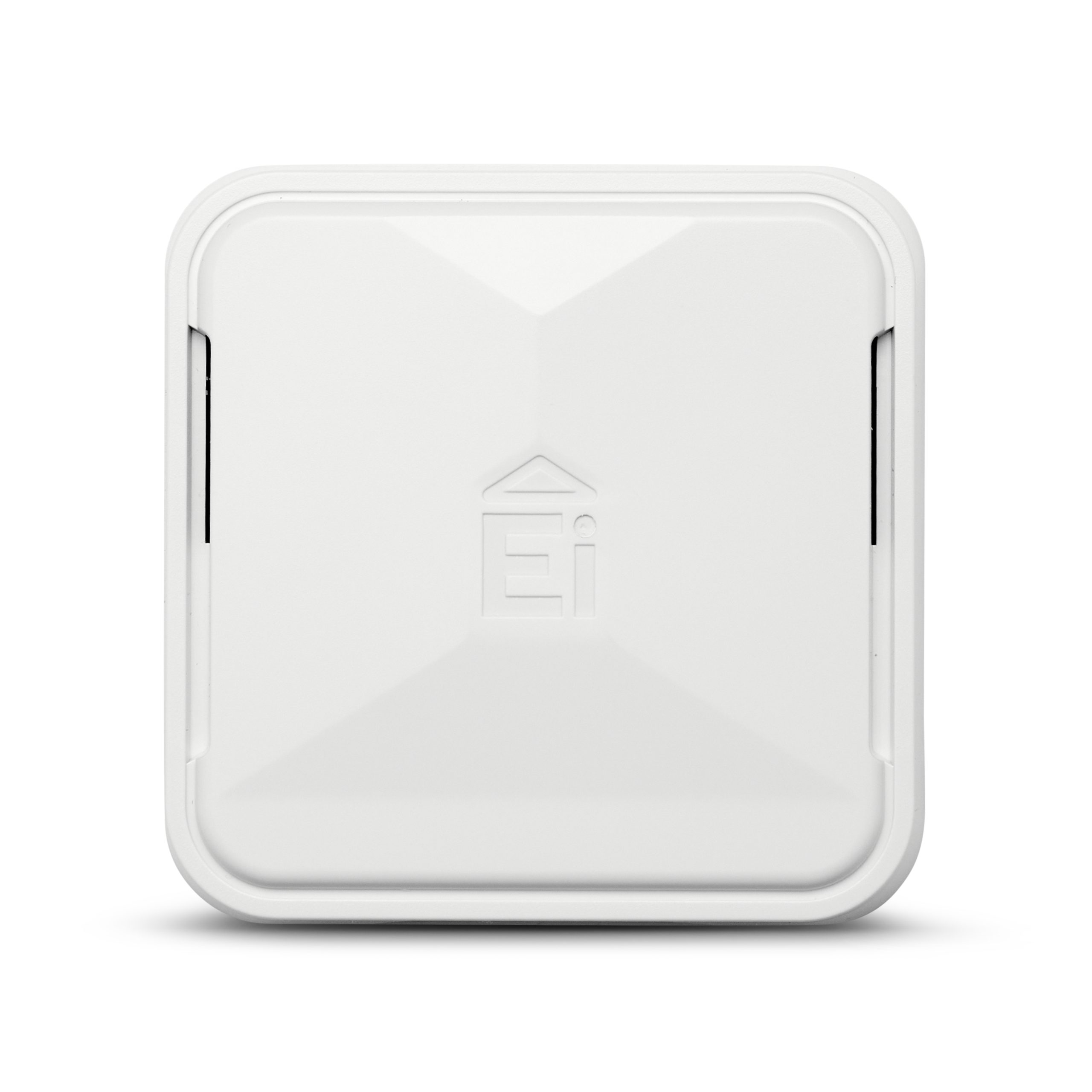
Interconnected alarms can provide an additional layer of protection by ensuring that when one alarm detects a fire or carbon monoxide (CO) event, other interconnected alarms throughout the home can also sound, helping to alert everyone, in other rooms and/or upstairs. Interconnected alarms are an important consideration when planning a comprehensive fire detection and alarm system, Aico’s 3000 Series alarms can be interconnected, providing a joined-up approach to fire and CO protection.
Don’t Overlook Carbon Monoxide
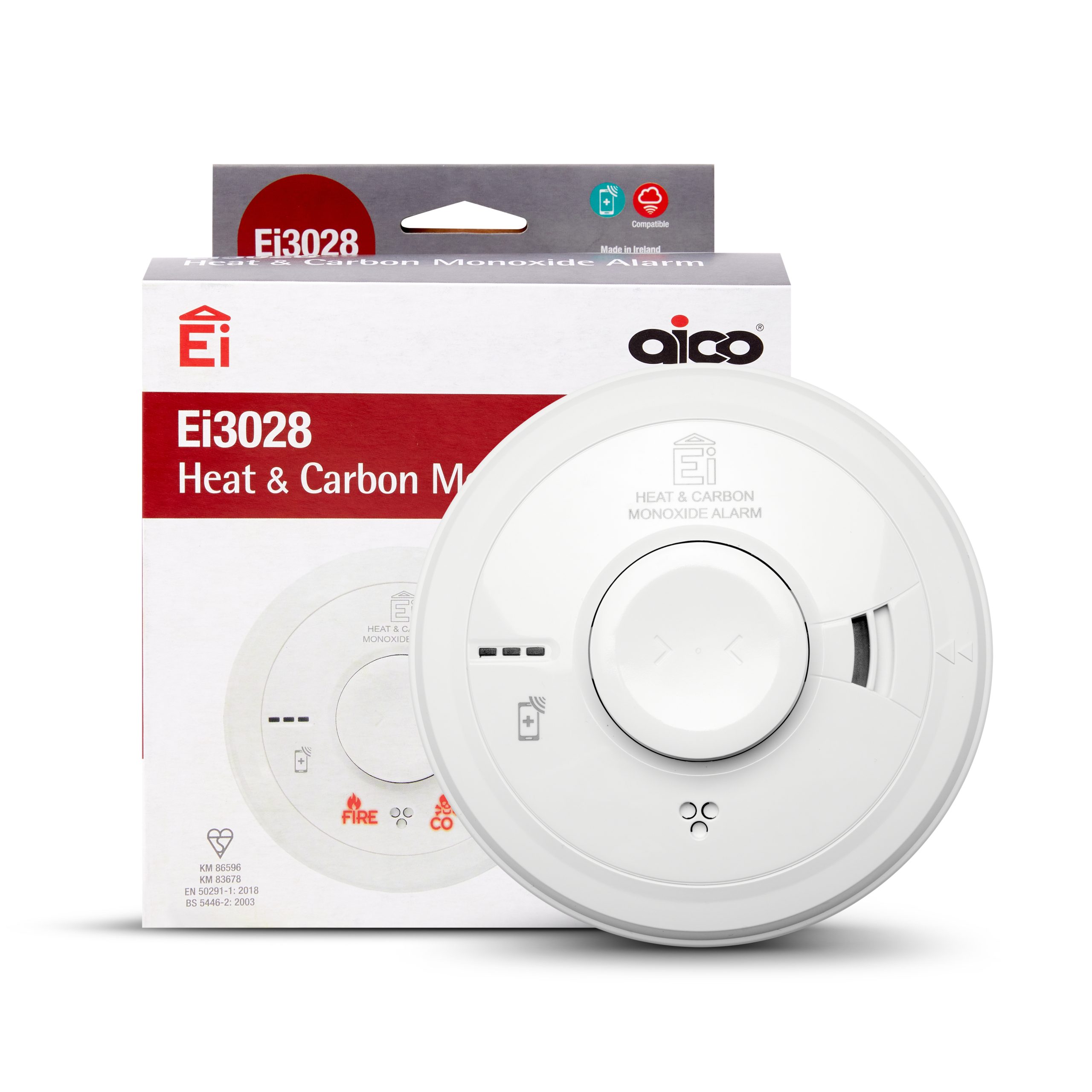
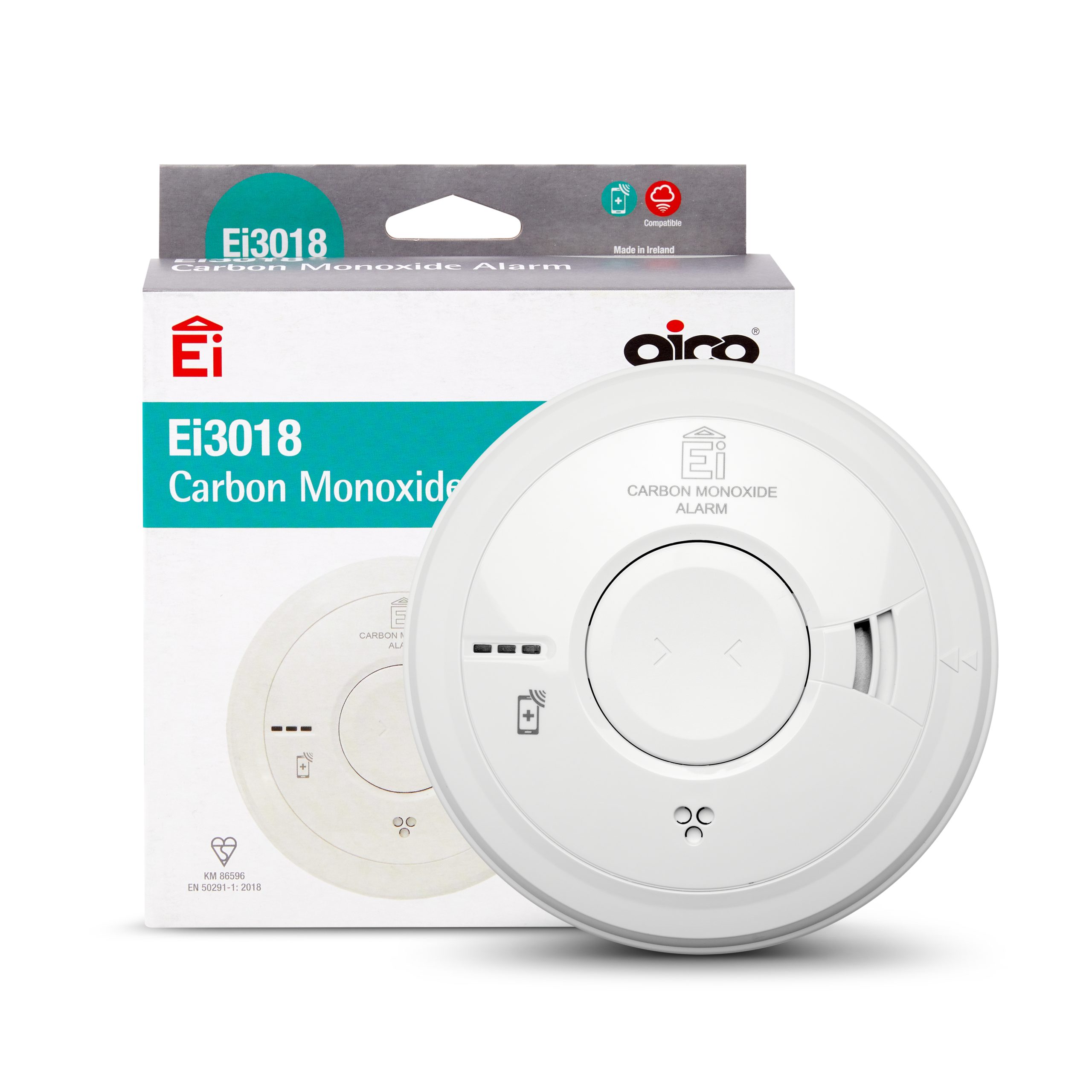
Fire isn’t the only risk associated with a kitchen. If the home has a gas cooker, boiler, open fire or another fuel-burning appliance, carbon monoxide protection should also be considered. CO is colourless, odourless and tasteless, meaning you cannot rely on your senses to detect it. Aico’s Ei3028 is one example of how fire and CO protection can be combined in a single kitchen alarm.
Make Ventilation Work for You
Good extraction is another important part of an open-plan kitchen. Using an extractor fan while cooking can help remove steam, cooking fumes and airborne grease. Keeping filters clean and maintaining the extractor according to the manufacturer’s instructions can also help it work effectively.
Open-plan Safety FAQs
What type of alarm should I fit in my open-plan living space?
Fire detection is essential, but the type and position of alarm are important. A smoke alarm positioned too close to cooking can be triggered by normal cooking fumes. A heat alarm is generally more appropriate for the kitchen itself, while smoke or multi-sensor alarms can provide protection in adjoining living areas. In an open-plan kitchen/living space, a multi-sensor fire alarm could be installed centrally between the two areas, but the size of the area does need to be considered.
Where should alarms be positioned in an open-plan living space?
As a general principle, smoke and heat alarms should be ceiling-mounted and positioned as centrally as possible within the area they are protecting, while remaining at least 300mm from walls and obstructions.
Can I put a smoke alarm directly above my cooker?
Smoke alarms should not normally be positioned directly above cooking appliances because cooking fumes can cause nuisance alarms. A heat alarm is generally the better choice for kitchens but should still be sited away from the oven/cooker.
Are interconnected alarms worth having?
Yes. Interconnected alarms can provide an additional layer of protection by ensuring that when one alarm detects a fire or carbon monoxide (CO) event, other interconnected alarms throughout the home can also sound. This can help alert occupants more quickly, particularly pertinent in open-plan spaces where an alarm may not be easily heard from elsewhere in the building.
Interconnected alarms are an important consideration when planning a comprehensive fire detection and alarm system. BS 5839-6:2019+A1:2020, the British Standard covering fire detection and fire alarm systems in domestic premises, provides recommendations for the planning, design, installation, commissioning and maintenance of these systems. It also highlights the importance of achieving adequate audibility from alarm devices.
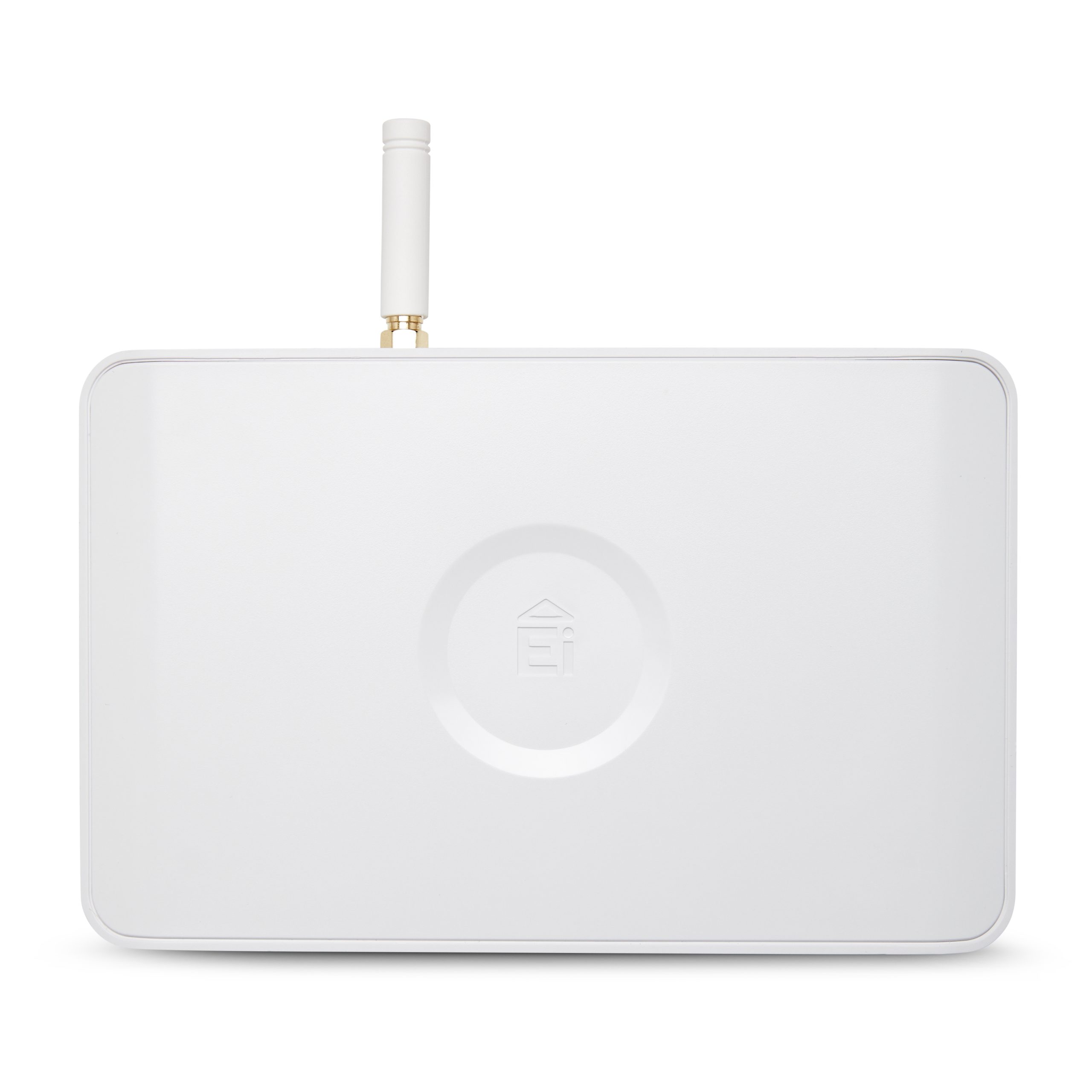
Aico’s RadioLINK technology enables alarms to be wirelessly interconnected, helping create a connected fire and CO protection system throughout the home without the need for interconnecting cables. You can find out more about how RadioLINK works and how it can support connected fire and CO protection here.
Open-plan living is all about bringing people together, taking time to consider fire prevention, detection and escape, when planning your home will keep you and your loved ones safe.