
Scottish Legislation
Smoke Alarm Regulations Scotland – Guide to Fire and Smoke Alarm Compliance
Scottish legislation has changed. Introduced in February 2019, the change applies to all households in Scotland and must be met by February 2022. The new Scottish legislation states that an interlinked Fire and Smoke alarm system must be fitted in a property and that there should be adequate Carbon Monoxide protection.
Are You Compliant with Scotland’s Smoke Alarm Regulations?
This update to the smoke alarm law in Scotland brings the Tolerable Standard. This change has resulted directly from recent fire tragedies and aligns with modern fire safety legislation, which requires interlinked fire and smoke alarms, as well as carbon monoxide protection, in all homes across both the private and social housing sectors.
Fire and Smoke alarms must be interlinked, and this can be achieved via traditional cabling methods or wireless. This new Scottish legislation also requires a Carbon Monoxide detector to be installed where there is a fuel-burning appliance (such as boilers, fires, heaters and stoves) or where there is a flue. Homeowners and Landlords must comply with the new Scottish legislation by February 2022.
Does the New Smoke Alarm Law in Scotland Apply to All Homes?
All homes in Scotland will be covered by the new legislation, as it is important that all homes should be safe for occupants, regardless of tenure. It will be the property owner’s responsibility to meet the new Scottish smoke alarm regulations; however, the legal duty to enforce the standard rests with local authorities. Where owners are unable to meet the standard, it is not a criminal offence.

*Given the impact of COVID-19, and the difficulties this created for people seeking to install new smoke and carbon monoxide alarms, the Scottish Parliament delayed the implementation of this legislation for a period of 12 months, extending the deadline to February 2022.
How to Update Your Fire and Smoke Alarm System in Scotland
If you already have Fire and Smoke alarms installed in your property, check that they are interlinked. If you have an alarm system but it does not currently comply with the new smoke alarm law in Scotland, you can expand your system with wireless interconnection. By having an interlinked system, the whole alarm system will be triggered if one alarm is activated, meaning you are alerted immediately in the event of a fire.
If you need to expand your current alarm system, or if access to a permanent live is difficult, tamper proof long-life battery-powered alarms can be used in place of mains-powered alarms with the tamper-proof long-life battery back-up, providing they can be interlinked. Our 600 Series Fire and Smoke alarms are battery-powered units that meet this requirement, whereas our 3000 Series are the mains-powered equivalent.
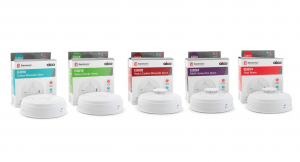
Best Interlinked Smoke and Heat Alarms for Scottish Homes
Recommended solutions for full compliance with Scotland’s smoke and fire alarm regulations
Guide to Scotland’s Fire and Smoke Alarm Legislation
Our video simplifies Scotland’s smoke alarm legislation, explaining what alarms homeowners need, where to install them, and how to meet smoke alarm laws in Scotland
Why does Scottish smoke alarm legislation differ from that in other UK nations?
Scotland has introduced stricter smoke and fire alarm regulations compared to the rest of the UK. This is because the Scottish Government reviewed fire safety standards and wanted to create a higher, consistent level of protection across all types of housing. This ensures equal protection for homeowners, tenants and vulnerable residents. In the UK, requirements can differ by property type or landlord obligation.
Key Deadlines and Compliance Actions for Landlords & Local Authorities
Scotland’s smoke alarm legislation set February 2022 as the compliance deadline, meaning every home in Scotland must meet the updated fire safety requirements. Property owners and landlords are legally responsible for ensuring compliance.
Key compliance actions include:
What Smoke, Heat, and Carbon Monoxide Alarms Are Required in Scotland?
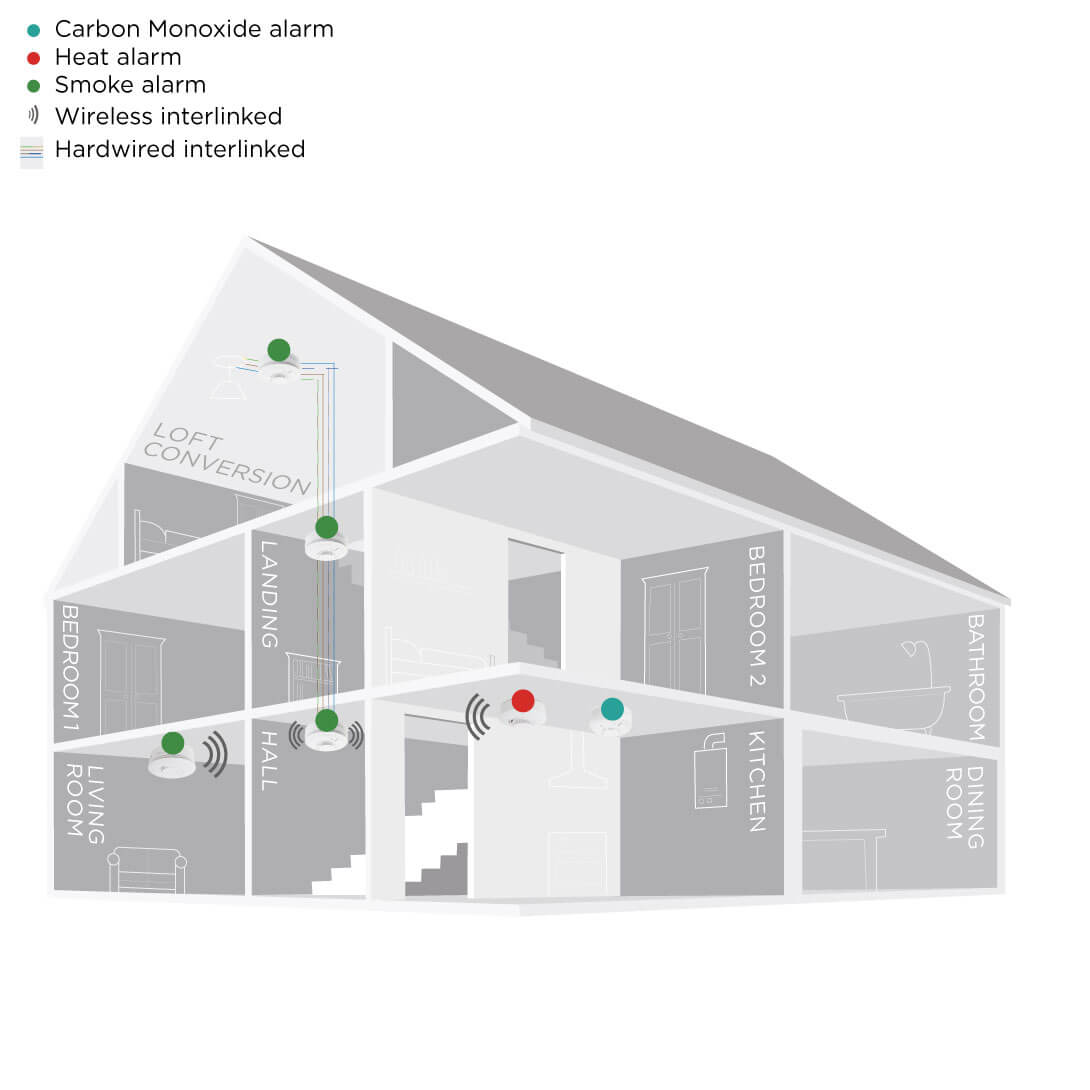
- One smoke alarm installed in the room most frequently used for general daytime living purposes (normally the living room/lounge)
- One smoke alarm in every circulation space on each storey, such as hallways and landings
- A heat alarm in every kitchen
- All smoke and heat alarms to be interlinked
- Carbon monoxide alarms where there is a fuel-burning appliance or a flue
- Alarms can be sealed long life battery or mains-powered
Additional fire and smoke alarm compliance actions:
- For landlords: meet the Repairing Standard obligations and keep written records of compliance.
- For local authorities: support vulnerable residents with installation schemes and provide enforcement where non-compliance is identified.
Failure to meet these requirements may affect tenancy agreements, insurance validity, and property safety certification.
Carbon Monoxide Alarm Requirements in Scotland
If you choose to install a battery-powered Carbon Monoxide alarm, ensure it complies with BS EN 50291, and that it includes a long-life battery. A mains-powered detector can also be used, as long as it complies with BS EN 50291 (Type A).
Ensure your home has reliable protection from Carbon Monoxide by testing and maintaining your alarm on a regular basis.
Working in partnership with SELECT
Aico and SELECT are working in partnership to provide information on the new standards in Scotland.
This resulted in the launch of the essential guide to help inform and educate the public on the new regulations about Smoke, Fire and Carbon Monoxide alarms. Find out more about British standards, regulations and legal compliance.
To help achieve fire and smoke alarm compliance, Aico and SELECT produced a comprehensive step-by-step guide detailing exactly what is required in all properties, including Social Housing, Private Rented Properties and Domestic Dwellings.
Under the new regulations, by 1st February 2022, every home in Scotland must meet the ‘Tolerable Standard’ by having smoke alarms in every circulation space, smoke alarms in the rooms most frequently used, a heat alarm in the kitchen and a Carbon Monoxide alarm where there is a fuel-burning appliance or flue. All fire alarms must be interlinked to form an effective warning system.

“Although consumers and landlords don’t need to comply with the new regulations until 2022, it is vital to raise awareness about exactly what needs to be done.”
“This new support tool is designed to give an easy-to-follow overview of the changes, helping people across Scotland understand what they have to do and why.”
Dave Forrester, Head of Technical Services at SELECT
FAQ’s
How many smoke alarms do I need in Scotland?
Under Scotland’s smoke alarm requirements, you must install:
- One smoke alarm in the main living area.
- One smoke alarm in every hallway or landing.
- One heat alarm in each kitchen.
All required alarms must be interlinked so that when one is triggered, they all sound. A carbon monoxide alarm is also mandatory where there is a fuel source or flue.
Are battery-operated smoke alarms legal in Scotland?
Yes, but only if they are sealed long-life lithium battery alarms that can be interlinked. Older replaceable-battery units are not compliant with current smoke alarm legislation in Scotland. Homeowners can choose either mains-powered or sealed long-life battery alarms, provided they meet the required standards. This flexibility allows compliance without the need for rewiring in many Scottish homes.
What are the penalties for not complying with Scotland’s smoke alarm regulations?
Non-compliance with Scotland’s smoke alarm legislation can affect home insurance, tenancy agreements and property standards. Landlords who do not provide proper fire and carbon monoxide detectors may be considered in violation of the Repairing Standard, allowing tenants to bring the issue before a tribunal, which can result in enforcement orders. Homeowners risk reduced protection and potential issues when selling a property or insuring their home.
How can I avoid mistakes when meeting smoke alarm requirements in Scotland?
To stay compliant, install interlinked smoke and heat alarms, place them in all required rooms, include a carbon monoxide alarm where needed, and maintain testing logs. Landlords should keep written proof to meet the Repairing Standard.
We’re Here To Help
Find the information you need in our library of educational and informative resources.
FAQs