Carbon Monoxide vs Carbon Dioxide: What’s the difference?
What are Carbon Monoxide and Carbon Dioxide?
We will explore the differences between Carbon Dioxide (CO2) and Carbon Monoxide (CO), including the dangers of each, how to manage the risk of exposure, and the frequently asked questions.
Quick summary: Carbon Monoxide vs Carbon Dioxide
- Carbon Monoxide (CO): A poisonous gas produced by incomplete combustion. Colourless, odourless, and dangerous even at low levels.
- Carbon Dioxide (CO2): A naturally occurring gas; harmful only at high concentrations in poorly ventilated areas.
- Health impact: CO prevents oxygen transport in the blood; CO2 reduces oxygen levels in the air.
- Sources: CO comes from faulty boilers, fires, stoves, and engines. CO2 comes from cooking, poor ventilation, open flames, and human respiration.
- Protection: Install CO alarms near every fuel-burning appliance; reduce CO2 through ventilation and airflow.
Understand the difference between Carbon Monoxide and Carbon Dioxide
| Feature | Carbon Monoxide (CO) | Carbon Dioxide (CO₂) |
| What is it? | Poisonous gas produced by incomplete combustion | Naturally occurring gas produced by respiration and combustion |
| Harmful at low levels? | Yes, very dangerous | No, unless concentration becomes very high |
| Main health risk | Prevents oxygen binding in the blood | Displaces oxygen in the air |
| Symptoms | Headache, dizziness, nausea, collapse, unconsciousness | Headache, breathlessness, drowsiness at very high levels |
| Common sources | Faulty boilers, fires, stoves, engines, and charcoal | Cooking, poor ventilation, candles, heaters, and people |
| How to reduce risk | Install CO alarms, maintain appliances | Increase ventilation, reduce indoor combustion |
| Relevant product | CO alarms | Environmental sensors |
What is carbon dioxide?
Carbon dioxide is a natural gas required for plant and animal life. While problems caused by CO2 are rare, it can still cause poisoning in high concentrations, like CO.
Carbon dioxide is a non-flammable gas that is significant to the earth’s atmosphere. Produced through natural processes, CO2 is also a byproduct of human activities such as the burning of fossil fuels for energy. Although it is necessary for maintaining the earth’s temperature and supporting life, excessive exposure to CO2 has led to an enhanced greenhouse effect.
CO2 generally is not toxic to humans within its natural concentrations; however, when in poorly ventilated spaces, too much carbon dioxide can displace oxygen levels, causing suffocation, asphyxiation, and even fatalities.
How to reduce carbon dioxide levels?
Carbon dioxide levels can be reduced by increasing air flow throughout the home, particularly when cooking. Fire uses oxygen in the property and replaces it with CO2, so reducing the use of fires and candles can reduce CO2 emissions in the home. Smoking also contributes to CO2 being released. Read our smoking and fire safety tips for the home for more guidance.
What is carbon monoxide?
Carbon monoxide is an unnatural and poisonous gas that is produced when fuels such as gas, oil, coal and wood do not fully burn. It can also be produced by the fumes generated from burning charcoal, running cars and smoking cigarettes.
‘Monoxide’ refers to the bond between a single carbon atom and a single oxygen atom, while ‘dioxide’ refers to a single carbon atom and two oxygen atoms. Both CO and CO2 are colourless, odourless and tasteless gases, although high levels of CO2 are sometimes described as “acidic” or “bitter”.
Why is carbon monoxide dangerous?
Carbon monoxide enters the blood through the lungs and attaches to the body’s oxygen carrier, haemoglobin, which will reduce the amount of oxygen that can be carried around the body.
Carbon monoxide awareness is often overlooked as it’s not visible and has no odour or taste. However, CO is one of the most dangerous gases and is responsible for many fatalities across the UK.
Signs of poisoning vary depending on carbon monoxide exposure levels and are not always as obvious as they can be similar to the common symptoms of illnesses such as the flu or food poisoning.
Symptoms of CO poisoning include dizziness, breathlessness, headaches, nausea, collapsing, unconsciousness and hospitalisation. Symptoms from breathing in carbon monoxide can worsen with prolonged exposure and, in some instances, be fatal.
How to reduce carbon monoxide levels?
To reduce exposure to carbon monoxide, a CO alarm should be installed in each room that contains a gas, oil, coal or wood-burning appliance.
Heating and gas appliances should be properly installed and regularly maintained. Scheduling boiler service checks with a qualified engineer will help reduce a potential CO leak. Chimneys and flues should be regularly cleaned and well-maintained; follow our chimney safety measures to prevent fires. Barbecues and camping stoves should not be used indoors or inside a tent, and vehicles should not be left on inside garages.
Recommended CO alarms
Aico’s Ei3018 Carbon Monoxide Alarm is mains powered with a sealed-in 10-year rechargeable lithium battery backup. Compatible with other Aico devices, the Ei3018 features AudioLINK+ data extraction technology and can wirelessly interconnect with alarms using the Ei3000MRF SmartLINK module.
Alternatively, the Ei3030 Multi-Sensor Fire and Carbon Monoxide Alarm contains our three proven sensors: thermistor heat sensor, optical smoke, and electrochemical CO sensor for the ultimate fire response. It is recommended that alarms be cleaned monthly, in this case by running a vacuum with a narrow nozzle around the three CO entry holes.
Our Ei208 is a standalone battery-powered unit with a sealed 10-year lithium battery and has built-in AudioLINK+ technology. For the interlinkable version of this alarm, opt for the Ei208WRF.
Aico carbon monoxide and environmental monitoring products
| Product | Type | Key Features |
| Ei3018 | Mains-powered CO alarm | 10-year rechargeable battery, AudioLINK+, SmartLINK compatible |
| Ei3030 | Multi-Sensor Fire & CO alarm | Heat, smoke, and CO sensors in one alarm. 10-year rechargeable battery, AudioLINK+, SmartLINK compatible |
| Ei208 | Battery CO alarm | Sealed 10-year lithium battery, AudioLINK+ |
| Ei208WRF | Interlinkable CO alarm | Wireless interconnection capability. Sealed 10-year lithium battery, AudioLINK+ |
| HomeLINK Environmental Sensors | Indoor air quality monitoring | Monitors humidity, temperature and CO₂ levels; works with HomeLINK Gateway |
Aico’s Ei1025 HomeLINK Environmental Sensors are designed to monitor temperature, humidity and carbon dioxide levels within a property. They can be placed in any room with minimal disruption to residents.
Alarms and environmental sensors can be combined with the Ei1000G Gateway for the complete Connected Home Solution. This allows landlords to remotely monitor each of their properties, giving them access to valuable property data and actionable insights to help reduce various risks, from damp and mould to indoor air quality levels.
Carbon Monoxide & Carbon Dioxide FAQs
What do the gases smell like?
Both carbon dioxide and carbon monoxide are colourless, odourless and tasteless.
Where do the gases come from?
Carbon dioxide is a naturally occurring gas which is produced through natural processes such as respiration and volcanic activity, and is also a byproduct of human activities such as the burning of fossil fuels. It is non-flammable, with no explosive properties.
Carbon monoxide is the result of the incomplete combustion of fuels such as gas, oil, coal and wood.
Where should you fit carbon monoxide alarms?
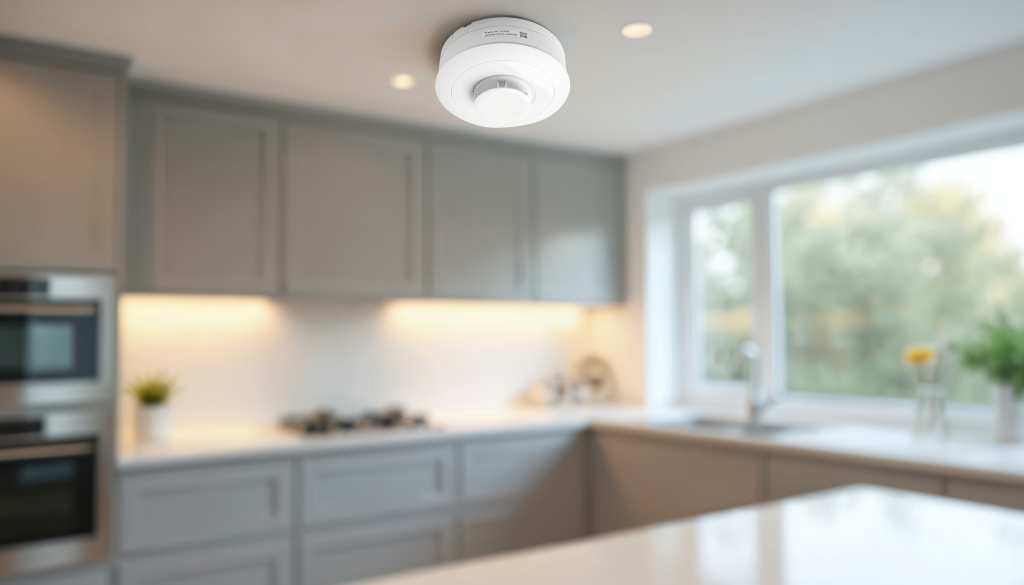
When a room contains a fuel-burning appliance, a carbon monoxide alarm should ideally be ceiling-mounted. The alarm should be sited 300mm from walls and obstructions and within 1-3m horizontally from the appliance. If there is more than one appliance in the same room, the alarm should be sited between the two, ensuring it is within 1-3m from both. If the appliance is enclosed (e.g in a cupboard), the alarm should be sited just outside.
For rooms without an appliance, a CO alarm should be wall-mounted at breathing height (usually bedhead height in bedrooms).
Carbon monoxide alarms should not be mounted in an enclosed space, next to a door, window, extractor fan or vent, and also not where it is damp or humid.
For more information on how to site alarms correctly throughout a property, view our technical support or contact our team.
What are the symptoms of CO2 and CO poisoning, and how long do they last?
Symptoms of mild carbon monoxide poisoning include headaches, dizziness and vomiting (at concentrations less than 100ppm). 0.1 ppm is the current average CO level on the planet, and 9-50 ppm is the standard limit for an 8-hour workday.
Severe carbon monoxide poisoning occurs when concentration levels are between 200-800ppm. These levels can cause unconsciousness and fatality within hours. When levels of carbon monoxide reach 4000ppm, the situation can be life-threatening in minutes.
The Ei3018 Carbon Monoxide Alarm monitors CO levels in the household. The sensor is individually calibrated and tested to ensure complete accuracy in its detection. When combined with HomeLINK Environmental Sensors and Gateway, both CO and CO2 can be monitored, with data and insights available to view via the online dashboard.
Protect your property from carbon monoxide
Read more about CO poisoning on the NHS website.
Alternatively, visit the Government website for carbon monoxide guidance.
If you think you might have carbon monoxide poisoning, call the NHS on 111.
If you are finding it hard to breathe, you suddenly become confused, or if another person loses consciousness, call the emergency services on 999 or go to A&E.